
Why Putting Salt on Missouri Roads Below 11°F Is Pointless and How It Can Damage Your Landscape Later
Why Road Salt Can Harm Your Lawn & Landscape In Missouri
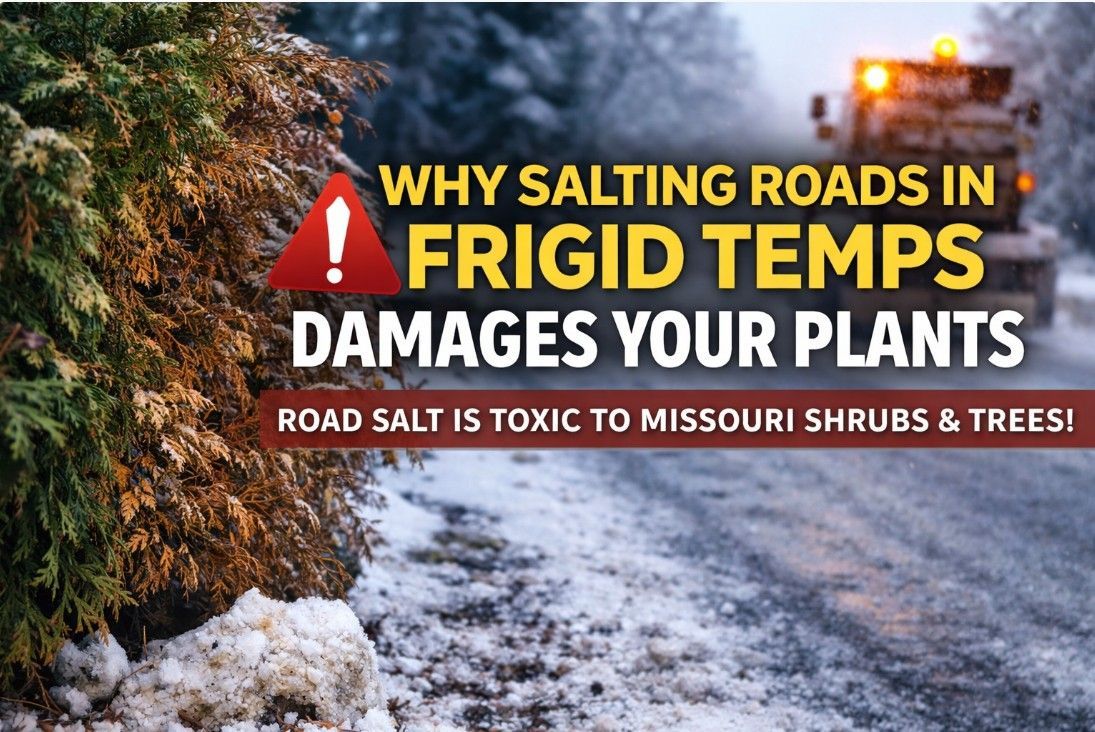
Winter weather in Missouri brings snow, ice, and a familiar sight: road salt spread everywhere. This past weekend also brought temps in the single digits throughout St. Louis and St. Charles County along with nearly a foot of snow. While salt is commonly used to improve driving conditions, many homeowners don’t realize it becomes largely ineffective at very low temperatures , and when temperatures finally rise, that same salt can quietly damage lawns, trees, and landscape plants.
At Hackmann Lawn & Landscape, we see the effects every spring. Here’s why excessive winter salt use can be a problem, especially for Missouri landscapes.
Why Road Salt Stops Working Below 11°F
Most road salt used in Missouri is sodium chloride (rock salt). It works by lowering the freezing point of water, helping ice melt, but only to a point.
- Sodium chloride is largely ineffective below 10–15°F
- At 11°F and lower, salt does little to melt ice
- Salt often just sits on pavement until temperatures rise
During deep cold snaps, spreading salt may look proactive, but it provides minimal immediate safety benefit.
The Hidden Problem: Salt Activates Later
When temperatures rise above freezing, sometimes days or weeks later, that leftover salt finally dissolves.
At that point:
- Meltwater carries salt into soil, lawns, and planting beds
- Runoff concentrates along curbs, sidewalks, and driveways
- Salt accumulates where snow piles were repeatedly pushed
This delayed activation means landscape damage often appears weeks or months after winter ends.
How Salt Harms Lawns & Plants
Salt damage doesn’t always look dramatic at first, but it can have lasting effects:
1. Dehydrates Plants
Salt pulls moisture out of roots, making it difficult for plants to absorb water, even when soil looks wet.
2. Disrupts Nutrient Uptake
Excess sodium interferes with essential nutrients like potassium, calcium, and magnesium.
3. Alters Soil Structure
Repeated salt exposure compacts soil, reduces oxygen flow, and weakens root systems over time.
Missouri Plants Especially Vulnerable to Road Salt
Many common Missouri landscape plants struggle after winters with heavy salt use.
🌱 Turfgrass (Cool Season Lawns)
- Kentucky Bluegrass
- Tall Fescue
Symptoms include thinning, yellow patches, and delayed green up in spring.
🌸 Flowering Perennials
- Daylilies , weak flowering or no blooms
- Coneflowers (Echinacea), stunted growth
- Hostas, scorched leaf edges and poor emergence
These plants often sit near foundations and sidewalks where salt runoff concentrates.
🌳 Trees & Shrubs
- Maple trees, leaf scorch and branch dieback
- Dogwoods, stress related disease susceptibility
- Boxwood shrubs, browning and thinning
- Arborvitae, winter burn worsened by salt spray
Salt spray from passing traffic can coat buds and twigs, damaging new spring growth before it even appears.
Why Spring Damage Is Often Misdiagnosed
Homeowners frequently assume salt damage is:
- Winter burn
- Disease
- Poor soil quality
- Improper fertilization
In reality, road salt from January and February is often the root cause.
Smarter Winter Practices (and What Homeowners Can Do)
While municipalities control road treatment, homeowners can reduce landscape damage by:
- Creating buffer zones with mulch or stone near sidewalks
- Rinsing salt affected areas early in spring to flush soil
- Using salt tolerant plants near roads and driveways
- Avoiding piling snow onto lawns and planting beds
How Hackmann Lawn & Landscape Helps Repair Salt Damage
If your lawn or landscape struggles every spring, winter salt may be the reason.
Our services help reverse and prevent damage through:
- Soil conditioning and nutrient balancing
- Lawn renovation and overseeding
- Shrub and tree health treatments
- Custom landscape design for salt prone areas
Protect Your Landscape This Spring
Missouri winters are tough, but your lawn doesn’t have to suffer long term damage because of them.
📍 Serving St. Charles County, St. Louis County, and surrounding Missouri areas
📞 Contact Hackmann Lawn & Landscape today to schedule a spring evaluation and protect your investment before the growing season begins.
Hackmann Lawn & Landscape | Local expertise. Smarter lawn care. Better results.